Monday, April 9, 2012

Clothing Trends For Summer 2012


The summer is a fun time to experiment with new styles and revamp your wardrobe. This summer, you'll see intense bright colors like orange and yellow, and bright pink and purple. All kinds of accessories, especially hats and belts, will be widely seen this summer. Maybe it seems like summer is so far away, but it'll be here before you know it. Get your clothes early and be the first of your friends to sport the hottest summer trends. Below are some of the styles that will be popular this summer season.

Rompers: These comfy pieces have been making headway on catwalks all over the world. Celebs and other fashion icons are starting to sport them, and you'll be seeing more of them on the streets once it's warmer out. These one-piece suits are great as long pants or shorts. Popular fabrics for rompers are silk and satin, but you can also get more simple ones in cotton. There are many different kinds, from dressy to casual. Getting a few rompers as wholesale clothing now will save you tons in the summer.

The Androgynous Look: This summer, black pants and short black shorts will be popular with suspenders. The androgynous look was very popular for women in the 1920s, and now it's making it's way back to fashion. Add some flare to your black pants or shorts with different color suspenders, like white, yellow or red. Be the first of your friends to don this fashion forward look.

Ruffled Skirts: Skirts that are ruffled are sexy and flattering on any figure. Short ruffled skirts make the legs and thighs look great, and longer ones are good for more formal occasions. This summer, short ruffled skirts with contrasting colors will be in style. You'll see black skirts with patterns in red, yellow and purple. Also popular will be long skirts with chiffon ruffles. This is great for an evening look or for a formal daytime occasion like a beach wedding.

Sexy Sandals: Make sure your toes are perfectly polished this summer because sandals will be all the rage this summer. Wedges, flats and cute flip flops with a heel are what have been shown at runways for this summers trends. Colors like hot pink and bright orange will be hot this summer, as well as black leather strappy sandals with gems and rhinestones.

Large beach hats: Floppy beach hats with large brims are a wonderful way to add some style and mystery to a simple look. Wear this when you're out to lunch with your friends or walking for a stroll in the park.

Get all your summer must haves like wholesale dresses and other wholesale clothing through an online retailer like wholesalefashionsquare.com. They have all the season's latest trends and styles.

Modern Home Decor and Fashion Trends for 2012


As 2012 is upon us, it is a great time to look at designer forecasts for what are the hot colors for modern home decor in this new year. Benjamin Moore's 2012 ColorPulse event showcased an interesting trend in Preservation due to the current economic climate and a desire to connect with our past.

What is being called "Fabulous Foliage" includes shades of greens, and homes are even once again being decorated with botanical prints. Green and white fern fabric can be seen in home furnishings, such as accent chairs, throughout the hnme.

How to Pick Up Hot and Sexy Beautiful Single Women at the Beach


With Memorial Day approaching and summer just around the corner, it's time to sharpen our skills and learn how to pick up and seduce all those hot & sexy little single beach bunnies. Here are some helpful tips:

This is one of the more favorable and popular spots to meet single women for love, sex, and romance. They are there for the taking. Take your pick! The beach provides a perfect setting for meeting hot & sexy single women. It's a casual and relaxed atmosphere and most of the women are friendly. It's just simply a matter of approaching them and talking to them. That's all there is to it.

A lot of guys make the mistake of going to the beach and just stare at women and they stroll up and down the beach not even smiling or saying, "Hi" to women as they walk along. They don't even stop to talk to a girl that catches their eye. They just don't have the guts to approach them. What's really sad is that these women are there to have a good time and attract the opposite sex. Why do you think they wear those skimpy bathing suits? It's to turn you on and show off their bodies.

So be bold and aggressive and you'll be surprised how easy it is to meet and pick up single women at the beach. Now, I will describe some important techniques and strategies to use at the beach. Use them and you can't fail and you will have the summer of your life!

It's important how you dress for the beach. Dress well and don't just wear a pair of old cut-offs with holes in them. Wear a nice designer bathing suit like you see in Playboy or GQ magazines. Also, while not sunning, wear a shirt or pullover appropriate for the beach such as a tank top or colorful T-shirt. Invest in some nice attractive sunglasses (not the cheap kind). Try on several different styles and select the one that makes you look unique and different.


Now, you'll be all decked out for the beach and you'll stand out from the rest of the ordinary guys. What this means is that you'll attract the attention of all the hot & sexy beautiful women and that's exactly what you are striving for.

Xou should bring some very important equipment that you'll use in meeting and picking up single women at the beach. These are as follows:

    ICE CHEST - This is your most important item. Fill it with beer, wine, mixed drinks in a can and soft drinks. You'll use this to offer a girl a drink when you've approached a girl.
    BLANKET - Bring a blanket big enough for you and a girl to lay on. Make sure it's clean and attractive and not old and smelly.
    FRISBEE, VOLLEYBALL, BEACH BALL, FOOTBALL - With these you can approach a girl and ask, "Want to play?"
    RADIO - This comes in handy. What to do is lay near a girl or group of single girls and turn on your radio. Then you ask, "What station would you like to hear?" This opens the door for further conversation and opportunities to get to know a girl and make your moves.
    BODY SURFING BOARD - These are known as boogie boards. They are inexpensive and made of styrofoam. Buy two of them. Approach a girl and ask if she'd like to do some body surfing. You can buy these at Toys R' Us.
    SURFBOARD - If you do surf this can be an advantage in meeting single women. Some girls are very attracted to surfers. Most girls don't know how to surf and have never even been on a surfboard. If you do surf, all you have to do is approach a girl and ask her, "would you like to learn how to surf?" If you don't know how to surf, you can always fake it. It will be a lot of fun trying anyway.
    SUNTAN OIL - Here's one that will always work. Approach a girl you are attracted to and ask her, "Would you rub some suntan oil on my back?" You'll never get turned down (as a general rule) and it really feels good having a girl rubbing your back.
    While walking on the beach looking for single girls for romance, when a girl catches your eye, give her a warm smile and say, "Hi." If she responds, whatever you do don't keep walking by. Stop immediately and start talking to her. Invite her over to your blanket and offer her something to drink or you can invite her to go in the water. Also, you can ask her if she wants to play some beach sports such as frisbee, volleyball, beach ball, body surfing, etc.

If you pass a girl that you're interested in and she has her eyes closed, just approach her and say, "Weren't you on the cover of Cosmo?" She will be flattered and this opens up a conversation.

In conclusion, I hope I've given you some new ideas you have never thought of before on how to meet and pick up hot & sexy beautiful single women at the beach. Happy Hunting!


Friday, February 10, 2012

In Review: Life, and Nothing More... (1992)

Synopsis:

A few days after the devastating June 1990 Manjil-Rudbar earthquake that resulted in 40,000 fatalities and left 500,000 more homeless, a film director (Ferhed Kherdamend) and his son Puya (Buba Bayour) drive to the afflicted area in Northern Iran in search of Babek and Ahmad Ahmadpour, the stars of the unnamed filmmaker’s earlier feature, Where is the Friend’s House? (a 1987 release that was in reality directed by Abbas Kiarostami with the Ahmadpour’s starring).  As the father and son traverse the congested trunk highways and the treacherously steep dirt roads that lead to the village of Koker, they discuss a telecommunications tower and argue about the participants of a World Cup football match on the night of the quake; the boy and his father look on at the endless rows of survivors digging out from the mountains of rubble; and they ask various locals for directions to and news from the Ahmadpour’s Koker.  The film director and his son also give rides to a handful of the earlier film’s actors, each of whom they encounter traveling by foot.

Among these is an older gentleman who playfully objects to having been made up to look older for Where is the Friend’s House?.  The director and Puya pause in the old man’s village, with the former also conversing with newlywed Hossein (Hossein Rezai; this scene is replicated with Kherdamend and Rezai, as actors, playing the same roles in Kiarostami’s subsequent Through the Olive Trees, 1994) and the latter explaining to a bereaved mother that God was not the author of the deaths, the earthquake was.  After recommencing with their drive, the pair picks up another of the film’s actors, transporting the boy to his makeshift hillside home as he and Puya debate the World Cup final.  There, the film director inquires of a couple of pre-adolescent girls as to why they believe they survived, before leaving his son to watch a football match with his new acquaintances.  Once back on the road, the director learns that the Ahmadpour’s were just then spotted walking back to their village.  After giving a ride to yet another of his child actors, he speeds to reach the family in Koker, with his small hatchback struggling to climb the region’s hazardous inclines.  Following an aborted first attempt on the second of two towering hills, the film director reaches the top where he picks up a pedestrian who had aided him at the bottom of the ascent.  The two continue on with the film’s Vivaldi score reaching an uplifting crescendo as the picture fades to black.

Critique:

Conventionally considered the second of director Abbas Kiarostami’s undesignated ‘Koker trilogy,’ following Where is the Friend’s House? and preceding Through the Oliver Trees, Life,and Nothing More… (1992) positions itself between fact and fiction as it presents a Kiarostami-double “film director” in his search for Babek and Ahmad Ahmadpour, the child actors of Kiarostami’s (and his) feature Where is the Friend’s House?.  Though the film’s narrative, implicitly modeled on Kiarostami’s presumed real-life attempt to locate the Ahmadpour’s after the June 1990 Manjil-Rudbar earthquake, unfolds within a week of the tragedy, a greater temporal gap from the time of the earthquake to that of the shooting is belied by the autumnal colors that mimetically reinforce the mass casualties (e.g. the death) afflicting the region.  In this way, the film maintains a looser relationship to its stated temporal coordinates, and thus to the reality it is presenting, than is stipulated by the narrative.  Enough time has intervened to call into question whether the results of Kiarostami’s search – parallel to the ‘film director’s’ – were as uncertain as they were made to appear.

All of this is to say that Life, and Nothing More… is only made to look like a documentary masquerading as a fiction film.  In reality, Life, and Nothing More… is a fiction film that looks like a documentary pretending to be a fiction film.  Kiarostami’s subsequent Through the Olive Trees usefully clarifies Life, and Nothing More…’s deceptive ontological status: by virtue of the multiple takes of the 1994 film’s reconstruction of the film director-Hossein encounter in Life, and Nothing More…, the spectator is asked retrospectively to identify the earlier film’s identical scene as a construct, with the labor involved in its production – the crew behind the camera, and conceivably, multiple takes – erased from the resulting film.  Ultimately, Life, and Nothing More… is fiction to its narratological core, even if the objects of the filmmaker’s quest and their physical environment present a historical reality.    

In this latter respect, Life, and Nothing More… does document, even if it cannot claim the status of documentary.  Though the destruction is not as new as the spectator is made to believe, nor does everything he or she sees constitute a single day of filming, which is in both instances to say ‘though the film is fiction,’ the contents of the mise-en-scène once again belong to the regime of non-fiction.  This is the destruction wrought by the Manjil-Rudbar earthquake in northwest Iran.  These are the people whose houses have been destroyed and their loved ones lost.  This is the work that they must now perform as they seek to dig out one obliterated village after another.  Hence, it is a film populated by demonstratives, to use the linguistic term, even as it retains the fictional valence that distinguishes the picture from the documentary mode.  Kiarostami’s film combines these two modes, no less than the director’s previous, documentary-form Close-Up (1990), forging a double-helix of fact and fiction that everywhere underlies the work.  As such, Life, and Nothing More… becomes the confirmation of André Bazin’s realist film program, which itself sought to emphasize moments of non-fiction within narrative cinema’s fictional frames. 

It is unsurprising then that Life, and Nothing More… shares much of its aesthetic with the 1950s work of Bazinian exemplar Roberto Rossellini: for instance, as in Rossellini’s fount of post-war cinematic modernism, Voyagein Italy (1954), Life, and Nothing More… favors long takes of the surrounding landscapes shot through the speckled windows of moving automobiles.  Though rural landscapes were certainly present in Where is the Friend’s House? and modes of transport (a car, bus, motorcycle) featured prominently in the urban Close-Up, Life, and Nothing More… combines the two to produce an idiom that would help to define Abbas Kiarostami’s cinema throughout the 1990s – the era, at the time of this writing, of his greatest international repute.  Throughout this decade, Kiarostami alternates between wordless compositions shot through the windshields of his moving automobiles; figural close-ups of his protagonists conversing inside; and longer compositions of the vehicles snaking through hilly terrain, with his performers’ conversations remaining audible, even when their vehicles become miniscule in contrast to the surrounding landscapes.

Indeed, Kiarostami’s “unfinished” aesthetic crystallizes in the last of these strategies, with their powerful use of concealed spaces, as it does further in a narrative that invites its viewers to complete the dramatic arc[i]: in Life, and Nothing More…, Kiarostami leaves the filmmaker’s reunion with the Ahmadpour’s unseen, and thus open to viewer speculation, not that Kiarostami doesn’t suggest an ending in his spritely choice of music (along with the visual hint he provides in a group of tiny figures – the Ahmadpour’s? – walking across a distant horizon).  It is finally in this gap between absence and presence, as in the film’s slippery navigation of fact and fiction, where Kiarostami’s achievement is manifest.


Life, and Nothing More…

English Title: Life, and Nothing More…/And Life Goes On…
Original Title: Zendegi va digar hich…
Country of Origin: Iran
Production Company: Kanoon (Institute for the Intellectual Development of Children and Young Adults)
Director: Abbas Kiarostami
Producer: Ali Reza Zarin
Screenplay: Abbas Kiarostami
Director of Photography: Homayoun Payvar
Editor: Abbas Kiarostami
Music: Antonio Vivaldi
Sound Recording: Abbas Kiarostami and Changiz Sayyad
Runtime: 91 mins.
Genre: Drama/Art House
Color: Color
Year:1992

For additional pieces by this author on Abbas Kiarostami and the Iranian cinema, please check out Directory of World Cinema: Iran, Parviz Jahed, ed. (Chicago: Intellect for The University of Chicago Press, 2012). 

[i] See Abbas Kiarostami’s “An Unfinished Cinema,” printed for the Centenary of Cinema, Paris, 1995: http://www.dvdbeaver.com/film/articles/an_unfinished_cinema.htm.

Tuesday, January 31, 2012

New Film: Miss Bala & Mission: Impossible - Ghost Protocol

Premiering in the Un Certain Regard section of the 2011 Cannes Film Festival and released on a very limited basis in one of the leanest month on the U.S. theatrical schedule, Gerard Naranjo's Miss Bala bears witness both to the formal experimentation characteristic of the former and to the semi-exploitation orientation of the latter. Naranjo and cinematographer Mátyás Erdély bring an exceedingly fluid long-take aesthetic to Miss Bala's border world of Narco wars and beauty pageants, staging the film's on-going flow of action and the frequently disrobed body of the film's ex-model lead, Stephanie Sigman, in a graceful choreography of contiguous on and off-camera spaces.

Among the most memorable of Naranjo and Erdély's one-take tours de force is an early, off-balance composition in a nightclub powder-room that commences with Miss Baja hopeful Laura Guerrero (Sigman) standing alone in the right half of a static, divided frame. Suddenly, a para-military hit crew repels down the wall that splits the image, filling the empty middle distance in the left half; as the assassins check the toilet stalls on the same side of the composition, Laura crouches down into a nearby corner with the camera accordingly following, reframing the female lead in a far more constricted full. As Laura cowers, exposed to the gang against the wall, the spectator is made to focus (along with the protagonist) on the off-camera field, cued in not only to Laura's frightened reactions directed toward the previously visible space, but also to the sounds that inscribe the continuous, out-of-the-frame action.

Within this exemplary passage, Miss Bala's navigation of objective and subjective states emerges, with Laura's point-of-view ultimately articulated in the tight re-framing that occurs along with her attempt to escape view. Earlier, when she first arrives at that same Millennium night spot, the filmmakers' camera moves independent of character motivation, only joining Laura consequently as the apparatus propels forward in the same direction as the striding lead. In so doing, Naranjo provides an approximation but not a literalization of Laura's phenomenological experience. Though the camera is outside Laura, it effectively doubles here perception.

Elsewhere, to return to the economy of revelation and concealment that defines Miss Bala's registration of spaces, Laura's later escape from the bathroom occurs at the moment of her sudden reappearance in the upper recesses of the re-framed interior, climbing through a distant window. In so doing, Naranjo retroactively calls attention to the fact that Laura's dramatic act has been occurring off-screen all along, with the particularities of this mobile framing a matter of authorial imposition. The camera's point-of-view in this passage is that of an author who willfully leaves his heroine and her subjective experience only to treat her dramatic exit as an unexpected visual punctum moments later.

While Miss Bala's achievement might just be most conspicuously formal ultimately, it does still effectively inscribe the personal toll of the War on Drugs on the film's unwitting protagonist, providing a harrowing narrative of the variety of abuses she experiences - both on and off-camera, with the latter no less moving than the former - as well as a plausible account of how the under-class Tijuana native becomes a getaway driver and mule for the narcotics syndicate. Miss Bala is indeed her fundamentally tragic and contemporary story, even when Naranjo's exceptional visual set-pieces momentarily obscure this fact.

Mission: Impossible - Ghost Protocol (2011), master animator Brad Bird's live-action debut, from a screenplay by Josh Applebaum and André Nemec, dispels any questions of its director's facility for or fitness to the composited photographic medium with a work that not only plays to the form's visceral strengths - this is the so-called action thrill ride at its, well, most thrilling; Ghost Protocol is one of the few comparatively deserving films at the top of the domestic box office charts - but also one that manages to reflexively incorporate the new-to-the-director technology back into the tension-filled set-pieces themselves. With respect to the latter, Ethan (Tom Cruise) and Benji's (Simon Pegg) manipulation of a screen inside the Kremlin in an effort to provide the photo-real illusion of a space, rather than the space itself, crisply encapsulates the film's composited CGI form in a manner that partially recalls Ratatouille's (2007) allegorization of computer animation in its non-human creator. Ever the auteur, Bird again showcases his self-consciousness in producing an analogy to the specific medium of his production.

Bird's authorship is even more prominent in Ethan's superhuman feats, running up and down the world's tallest building - obsessed with numbing heights, Ghost Protocol gets the most out of the composite digital form's ability to make these moments photo-real - or simply punching his way out of a Russian prison without a moment to spare. The more obvious and fruitful point-of-reference for Ghost Protocol accordingly is Bird's Pixar masterpiece The Incredibles (2004), with which it likewise shares its relatively corny and occasionally topical sense of humor - Cruise's failed marriage and Jeremy Renner's homosexuality both receive narrative cameos - a sidekick in Benji who seems to suggest a partial re-imagining of pre-Syndrome Buddy Pine or perhaps Dash, and most notably, an acknowledgement of global terrorism, which thanks to Ethan's persistent unwillingness to give in, is ultimately curtailed - though not at the precise moment that Ethan declares the "Mission Accomplished!" In Bird's world, as in our own, the threat will only later be neutralized.

Saturday, January 21, 2012

Special to Tativille: "Sunset cul-de-sac? (The Artist)," by Jeremi Szaniawski

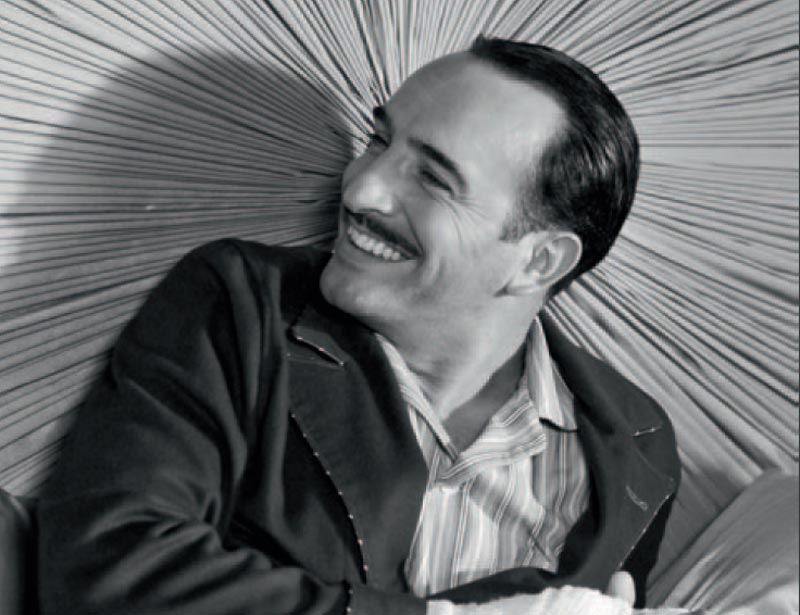
In 1927, Hollywood silent film star George Valentin (Jean Dujardin) unwittingly helps launch the career of smitten—and ambitious—dancer and starlet Peppy Miller (Bérénice Bejo). Little does Valentin know that the advent of sound film will soon render him obsolete, while Miller will become the new darling of his former studio. Valentin refuses to embrace the talkies, is driven to bankruptcy by the 1929 crash, and fails to conquer the box office with his final, self-financed silent film. Even so, his fall is halted by Miller’s financial support and care. But can the actor, given his resistance to new technology, ever make a comeback?

Grounded both in the tradition of melodramatic narratives and actual cinema history (the fall of its hero inspired by the similar fates of silent stars John Gilbert or Douglas Fairbanks, Jr.), set in an era of economic depression and technological shift in the film industry, The Artist (2011) could scarcely have been made at a more sadly appropriate moment. Therein however lies the suspicious aspect of an apparently sincere celebration of the first golden age of cinema, arriving at a time when most theaters around the world are trading 35mm for digital projection—and those who can’t afford the new technology can go quietly out of business. In this context, there is something almost sacrilegious, yet also painfully logical, about the inconsequential levity of the film, just as there is great irony about watching it in any format other than 35mm. To be sure, the deliberate softness and graininess of its cinematography are only done full justice on this soon-to-be-defunct format.

The film’s script itself clearly allegorizes the shift to digital and the loss it implies. Following a fire at Valentin’s home in which all his films are burned, Miller takes the only can of film that he salvaged from the fire, only to realize that it is a discarded scene of their one appearance on the screen together: his silent love declaration to the young woman. Such a diegetic moment, it is clear, would not have been possible in the digital age. In another scene, Valentin finds all his belongings carefully collected from pawnshops and at auctions by Miller, stored in a room of her Beverly Hills mansion, evoking the preservation and potential subsequent oblivion implied by digital storage.

There is nothing far-fetched about these observations. Director Michel Hazanavicius has a knack for using pastiche to comment on the present day situation, as attested to by his marginally amusing OSS 117 series—a parody of the 1960s James Bond franchise which criticizes French racism and bigotry (and like The Artist, also stars Dujardin). With this latest effort he has surpassed himself in terms of high concept: opting to make a silent film about the early years of talkies, instead of a sound film about the twilight of the silent cinema. Yet this explicit, inverted nod to Singin' in the Rain (1952) somewhat condemns the film to being an ironic, postmodern palimpsest, or, worse, falling into the derivative category of the spoof.

In earnest, one would love to love The Artist, which, at its best, is extremely endearing melodrama pastiche. But in spite of its seductively reconstructed universe, its script is glib and many scenes overly indulgent. In a way, the film as a whole replicates the self-congratulatory, hammy nature of its lead protagonists—but also, beyond their narcissism, their unlikely boneheaded likeability. With the added exoticism brought about by the revisiting of Hollywood by French eyes, and with French actors (this Gallic input providing the final joke of the film—and the founding argument behind Valentin’s resistance to sound technology: his thick French accent), one would gladly embrace the cheerful silliness of it all, had the film not been so incoherent in its referencing of film history.

The Artist is rife—of course—with quirky references to silent cinema techniques, and amusingly plays with the inversion of silence for sound (and these instances are by far preferable to Ludovic Bource’s often arch score). But for a film investigating the moment in time when the cinematic medium reached its apex in terms of visual plasticity and poetry, it displays a painful lack of coherence and purity: the film haphazardly blends visual quotes from King Vidor, Fritz Lang, FW Murnau, Fred Niblo, Sergei Eisenstein and Frank Borzage silent classics with shots straight out of 1940s cinema, most notably the dinner-table montage scene from Citizen Kane (1941). Elsewhere, the film references even the late 1950s: Valentin watches scenes from his own films on his home projector, inescapably evoking Gloria Swanson in Sunset Boulevard (1950); a nightmare scene evokes Wild Strawberries (itself an homage to silent cinema; 1957); and the soundtrack rather counter-productively quotes Bernard Herrmann’s ‘Scène d’amour’ from Vertigo (1958) in one protracted key sequence.

While the first part of the film is brisk and well paced, the second half tends to indulge more in this gratuitous quoting of silent classics, slowing down the plot’s progression with repetitious moments, so that the film’s own professed love of cinema proves to be its undoing. This does not detract, however, from its cast’s unquestionable charm (and, in Dujardin’s case, innate physicality), with Bejo resurrecting some of the young Joan Crawford’s sex appeal and pizzazz, and the score of Hollywood actors in bit parts (John Goodman, James Cromwell, Penelope Ann Miller, Ed Lauter, Malcolm McDowell) providing a very solid supporting cast to the action, emphasizing the self-referential nature of the film. Here, one should point out Goodman’s excellent performance as a partly debonair, partly tyrannical studio executive, and, even better, the little dog Uggie, quite irresistible as Valentin’s faithful sidekick both on and off screen, running to its master’s rescue in another borrowing from a classic cinema trope.

Silent cinema has already been revived in the post-silent period century (Aki Kaurismäki’s Juha [1999] a fine example), and it is a good thing that this film should receive wide acclaim, but let us not be fooled: if the film reaches its target, it is only by mistake. A telling anecdote dates from the early 2000s, when the mercurial producer Thomas Langmann (son of Claude Berri), furious that Guillaume Canet turned him down on a project, went up to the actor’s apartment and punched a guest of Canet’s who had the misfortune of opening the door, mistaking the unfortunate man for the actor—not knowing even, perhaps, what the actor he wanted for one of his projects actually looked like. Much like Langmann, The Artist lacks genuine refinement and taste, and further discernment, and confuses what it is willing to celebrate (silent cinema) for what it ends up producing, namely a pastiche potpourri of Hollywood classic cinema. In spite of appearances, and the obvious encyclopedic amount of documentation that went into reconstructing the universe of the film, The Artist’s authors know a lot about the look of early and classic cinema, but ultimately very little about the essence of the fine object they quote with such zeal. If the paraphernalia, costumes and visual charm of the silent era are certainly present here, the philosophy that elevates cinema to an art form is all but missing, and the freshness of the times is only recreated with a strong scent of formaldehyde, beautified with naively smiling clichés, tongue rooted firmly in cheek. It seems as though to the authors of The Artist, silent cinema was merely this warm and fuzzy, but ultimately somewhat stupid, panache-filled but immature art form. So that the bittersweet melancholy the film elicits, beyond the kitschy mish-mash of iconic imagery, has more to do with the death of a medium than the revived glory of melodramas of yore. Sunset Boulevard has become Sunset dead-end, or cul-de-sac, as the French call it. But it is a pretty nook all the same, and bric-a-brac has its charm, too. Warned that it is that (and, again, an obituary) that they are looking at, many should still go and enjoy the undeniable qualities of The Artist.

The author wishes to thank Michael Cramer and Marcelline Block for their help copy-editing this piece.

Monday, January 16, 2012

Hungry

I'm so hungry ;3; feed me please! 3am and I want tweaaaaats!